
AI for Anomaly Detection in SQL
Balancing Automation and Human Oversight in SQL Anomaly Detection

Imagine you are the guard of a huge treasure vault. But this vault doesn’t hold gold. It holds data. Every sale, every login, every user transaction is stored inside. Your job is to spot the one thief in a million. But watching everyone all the time is impossible.
This is where Artificial Intelligence, or AI, comes in. Think of AI as a super-powered detective that never sleeps. It constantly watches over the data vault. Its main job is to find the strange activity that signals something is wrong.
This is called anomaly detection. And it’s changing how we keep data safe.
Can AI Really Find Fraud in the Data?
Yes, it can. And it’s very good at it.
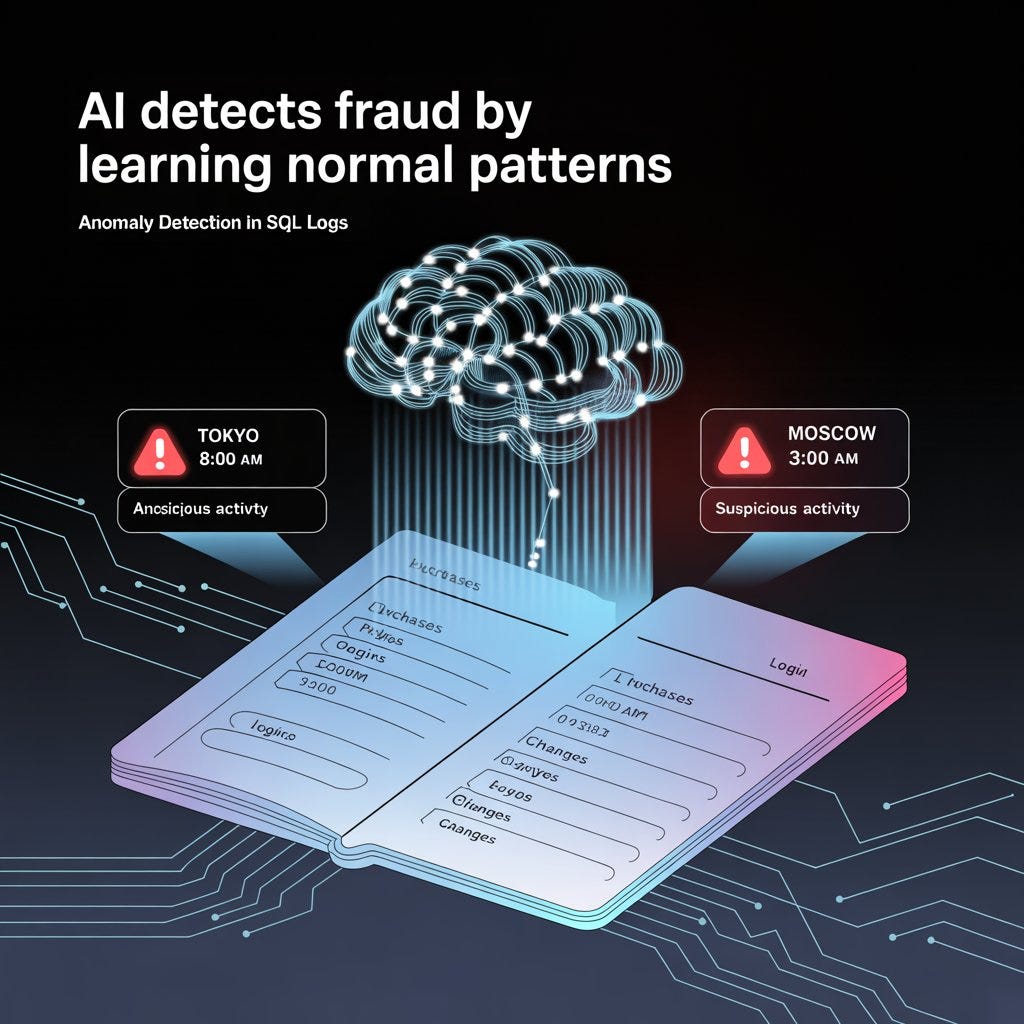
Think of your company’s SQL database as a detailed diary. Every time something happens, a new line is written in this diary. Every purchase. Every login. Every change.
An AI model is trained to read this diary. It learns what “normal” looks like for your business. It learns the usual patterns.
Let’s look at an example.
Imagine a streaming service, like Netflix or Spotify. It’s SQL log records every time a user signs in.
Normally, “User Alex” logs in from his home in Miami every evening. The AI learns this pattern.
Now, suppose a hacker steals Alex’s password.
Suddenly, there is a login attempt from a different country. The AI sees this immediately. It knows Alex never logs in from there. This is an anomaly. It’s a strange behaviour.
But hackers can be clever. They can use a tool to hide their location. It might look like the login is from Miami.
The AI doesn’t stop there. It looks deeper.
It sees the login happened at 4 AM Miami time. Alex is always asleep at that hour.
It also sees that after logging in, the person starts downloading hundreds of songs very quickly. Alex usually just streams one album at a time.
This behaviour is completely different.
The AI connects all these dots. It concludes that this is probably a hacker. It sends a red alert to the security team. They can then step in and lock the account, saving Alex’s information.
How Weird is Too Weird? Setting the Rules.
This is a tricky part. If your alarm system is too sensitive, it will ring all the time. You will get tired of the noise and start ignoring it.
But if the alarm is not sensitive enough, a real thief can break in without a sound.
In AI, we have to set a threshold. This is a rule for how strange something has to be before we get an alert.
Let’s use a coffee shop as an example.
They have a loyalty program. Their SQL database tracks every coffee purchase.
Bad Rule #1: Too Sensitive
The AI is told to flag any purchase over $10. This would flag every customer buying drinks for their friends. The manager gets 50 alerts a day. Almost all are false alarms. This is a waste of time.
Bad Rule #2: Not Sensitive Enough
The AI is told to only flag purchases over $1,000. No one buys that much coffee. The alarm never rings. Meanwhile, a scammer could be making lots of small, fake purchases. The AI would miss it.
The Smart Rule: Just Right
The business sets better rules. The AI should flag a transaction if:
It is much larger than the customer’s usual order.
It happens in a city the customer has never been to.
The same card is used 10 times in one hour.
This catches real fraud without too many false alarms. The business accepts that it might miss a very small, clever scam. But that’s okay. Chasing every little blip is not worth the effort.
Should the AI Act on Its Own?
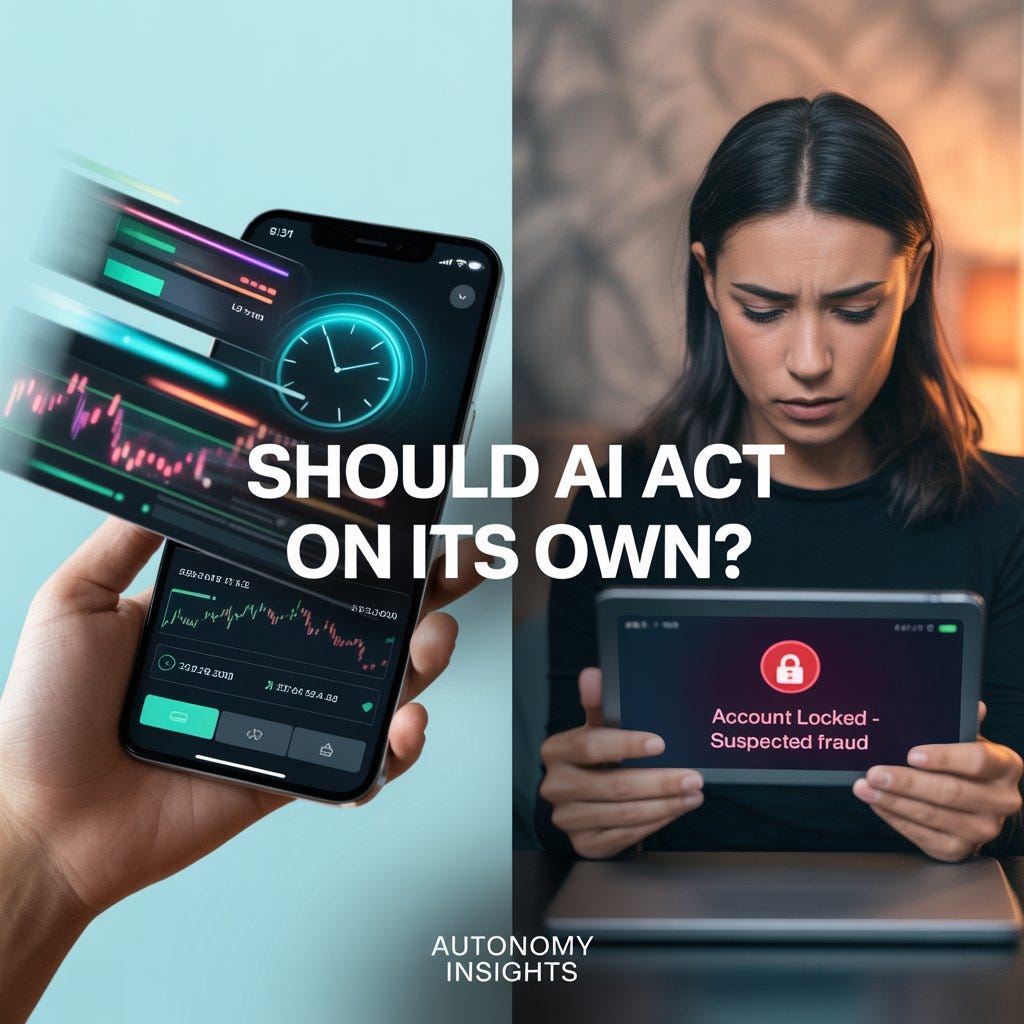
This is the big question. Should the AI just report the problem? Or should it be allowed to fix the problem by itself?
Automation can be a lifesaver. But it can also cause big problems if it makes a mistake.
Example 1: When Automation is Good
Think of a stock trading app. Speed is everything. If the AI detects a weird, rapid sell-off, there is no time for a human to check. It must act in milliseconds.
An automated SQL command can stop the transaction. This could save millions of dollars. Here, automation is essential.
Example 2: When Automation is Bad
Let’s go back to our streaming service. The AI sees a login from a new house. It is 90% sure it is fraud.
If it has automatic powers, it might lock the user’s account.
But what if it was just the user logging in at a friend’s house? Now, a loyal customer is locked out right before they watch a big game or a new movie episode. They would be very frustrated.
The “cure” was worse than the potential problem.
The Best Solution: A Mix of Both
We should use automation carefully.
The AI should be allowed to do small, safe things on its own, like:
Asking for an extra password check (2FA) on a suspicious login.
Temporarily blocking an account and immediately alerting a human to review it.
Stopping a hacker who is clearly trying thousands of passwords.
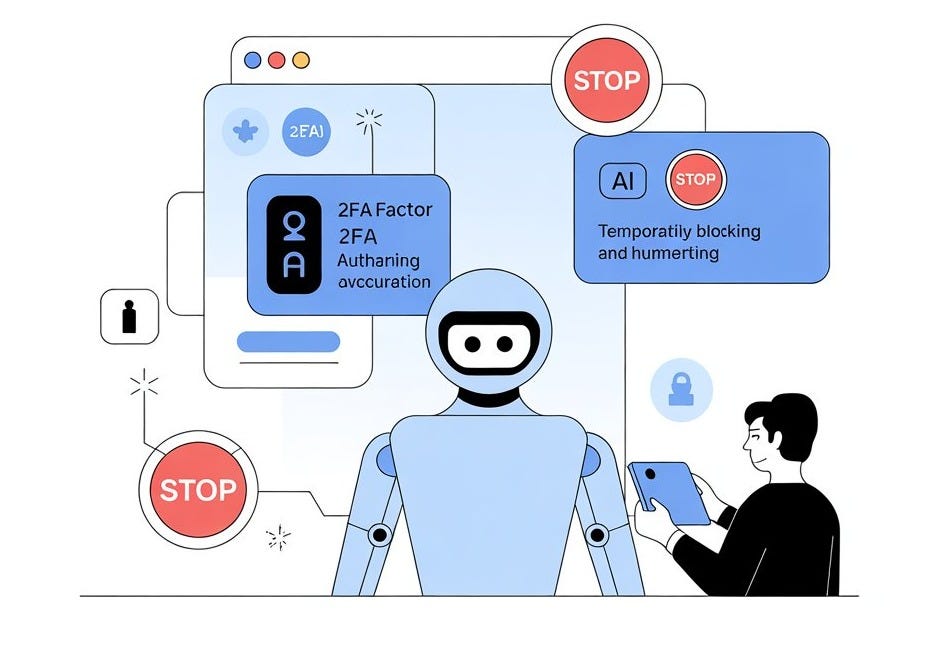
The Best Solution
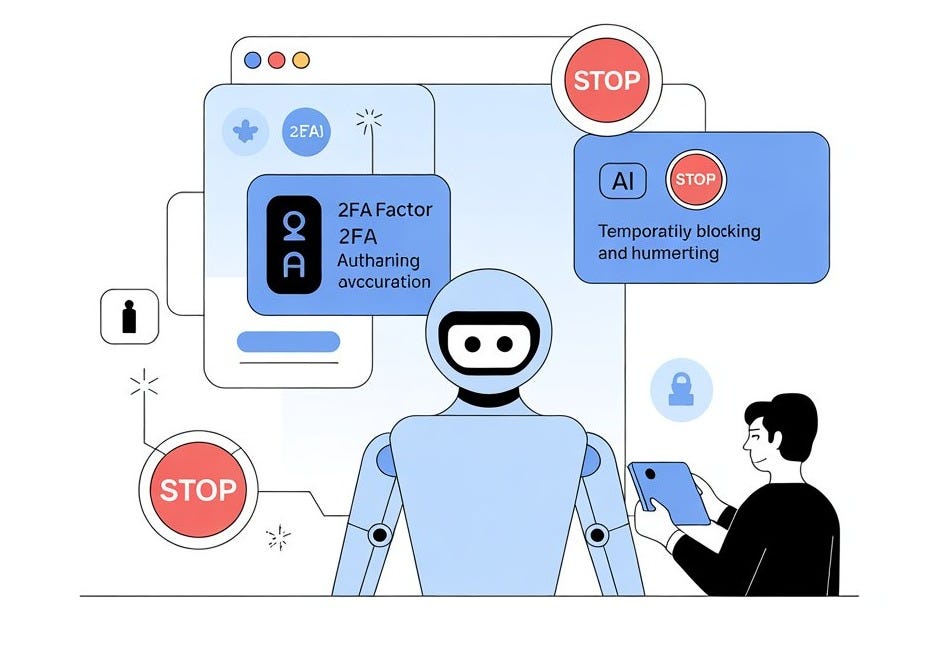
For everything else, the AI should be a smart assistant. It should send a clear alert to a human. The human can then use their brain and judgment to make the final decision.
Conclusion: A Powerful Partner, not a Replacement
In the end, using AI to detect anomalies in SQL is not about replacing humans. It’s about creating a powerful partnership.
Think of the AI as your most alert and dedicated employee. It never gets tired. It watches over millions of data points at once. It learns the normal rhythm of your business and spots the tiny, dangerous cracks that a human would almost certainly miss.
But the final judgment? That should still come from a person.
The AI provides the “what” – it tells you that something strange is happening. The human provides the “why” and the “so what” – we use our context, experience, and common sense to decide what to do about it.
By combining the raw speed and power of AI with the smart judgment of a human, we build a stronger defense. We can catch fraud faster, protect our customers better, and sleep a little easier at night, knowing our digital treasure vault has the best protection possible.
Until next time, stay curious.